
How Shipping Containers Travel Across International Waters
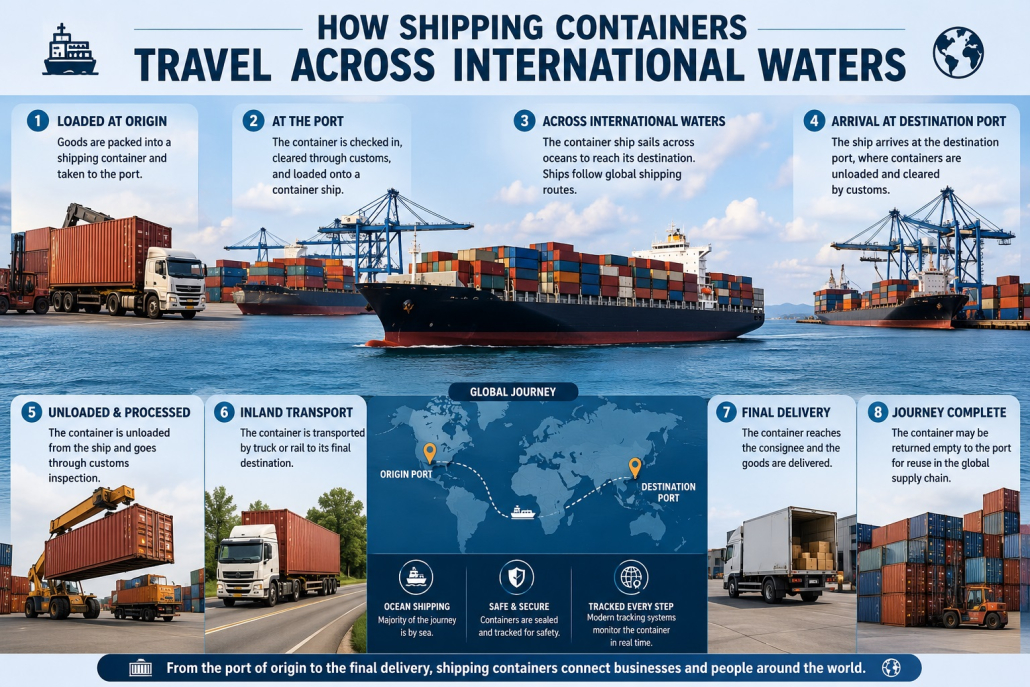
We place an international order and receive our parcel within weeks smoothly. But there is a whole procedure and people involved who make sure that we get our parcel on time and without any hassles. The process involves booking cargo space, loading goods in a container, and ensuring their safe travel. Billing, unloading at the destination port, and finally arranging road transportation.
There are two most common types of international shipping containers according to size: the twenty-foot equivalent unit and the forty-foot equivalent unit. Container transportation also consumed less space as the containers could be stacked.
Role of Freight Forwarder and Shipping Lines in Cargo Transportation
- An ocean freight forwarder is an agent who manages and organizes goods on behalf of the shipper. The main duties of a freight forwarder are arranging transportation from origin to destination, booking cargo, coordinating with ocean cargo transport companies, and preparing all the required documents.
- Shipping lines own vessels and move cargo containers through oceans. They provide containers and make them available for shippers and freight forwarders. Arranging cranes and loading and unloading goods safely is also arranged by shipping lines.
Step 1: Booking
In international sea freight shipping, the procedure begins when the shipper contacts the ocean freight forwarder to share details like cargo type, volume, origin, and destination. Then, the freight forwarder books a space for cargo shipping depending on the information provided. At last, the freight forwarder arranges a truck for the transportation of goods to the warehouse.
Step 2: Export Custom Clearance
Before the container shipping can take place, the custom duties of the shipment must be cleared. Usually, a customs broker or freight forwarder gets clearance from customs and files the declaration on behalf of the shipper so the cargo can leave the country.
Step 3: Container Loading at the Port
At a container freight station, the terminal staff and freight forwarder verify the packaging, documents, labels, and bills. Afterwards, the container is inspected and is loaded and secured to ensure minimal damage and less movement of goods inside the shipping container during the journey. After the container is sealed, the truck moves the containers to the port’s stacking area.
Step 4: Loading the Vessel
At the dock, the cranes lift the containers from stacking areas and place them on the ship according to the stowage plan that considers weight, destination port, and stability. The shipping line then issues a bill to the shipper or freight forwarder as proof that they are carrying the shipments. The ship then travels through international waters carrying the international shipping containers and reaches its destination within 20 to 60 days depending on the weather conditions and routes. During the journey, the tracking system keeps updating the shippers and consignee (loaded, departed, reached destination country)
Step 5: Arrival, discharge and custom clearance at the destination country
As the ship reaches its destination port, the cranes start unloading the containers. After unloading, the customs broker or freight forwarder issues the custom clearance documents, which consist of payments of taxes and duties. After clearance, the containers are allowed to leave the terminal.
Step 6: Unloading Procedures
At the warehouse, the staff inspects any visible damages, seal numbers, and all the required documents. After all the inspection, the crane unloads cargo using different tools and makes sure that all the unloading is done carefully.
Step 7: Delivery
As the goods are released from the container, the freight forwarder arranges transportation of the goods to the distribution centers so they can reach the consignees.
Major Ocean Cargo Transport Routes
- Far East to Europe
- Trans-Pacific from Asia to North America’s West Coast.
- Transatlantic between North America and Europe
- Asia to U.S East coast
- Panama Canal
- Suez Canal
- Straight of Malacca
Weather Challenges
Monsoons, storms, hurricanes, and fog force the ships to change route or slow down. These conditions can disrupt the schedules or cause containers to be damaged. But to prevent such conditions, shipping lines use satellite forecasts for planning, like departure times, safer paths, and adjusted speeds.
Leave a Reply
Want to join the discussion?Feel free to contribute!